OUR MISSION STATEMENT:
TO BE THE BEST STEWARDS OF THE ENVIRONMENT WE CAN BE.
TO PROVIDE THE MOST EFFECTIVE, ECOLOGICAL, LOWEST CARBON FOOTPRINT, COST EFFICIENT TREATMENT POSSIBLE TO PROTECT OUR CUSTOMERS AND THEIR FAMILIES FROM INSECTS, ANIMALS AND PESTS THAT MAY CAUSE HARM, DAMAGE OR DISEASE. TO USE THE LATEST AND BEST TREATMENT STRATEGIES FROM BENEFICIAL NEMATODES AND BOTANICALS TO THE JUDICIOUS USE OF INSECTICIDES AND TERMITICIDES. 14622 Jones Maltsberger
San Antonio, TX 78247
210-494-5800
Office hours M-F 7a-4pHi and thanks for visiting our website. We are a full-service Pest Management Company. Here in beautiful San Antonio, Texas we live with a lot of interesting insects and bugs; some we like such as Monarch Butterflies, Beneficial Ladybugs and Lacewings and then we have the ones we don't like: SCORPIONS, CENTIPEDES, WASPS, ROACHES,TERMITES etc. Rodents also like to live near us and sometimes they try to move into our houses. I tell my customers if they aren't paying rent let us move them out! If you see gnats in your house and they seem to stay longer than a day it might be time to clean your drains. I like to tell my customers to use 1 cup of Baking soda and pour it down the drain and follow it up with 1 cup of regular vinegar. It will start to foam and clean the pipe drain. Wait 5 to 10 minutes and then flush it down with hot water. Follow up in a week and you should notice the gnats will be gone. Do all the drains in the house, sinks, tubs, showers.
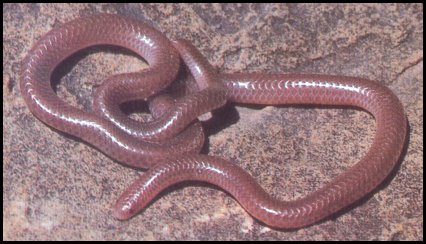
Texas Blind Snakes Description: Smooth, shiny cylindrical snakes; reddish-brown, pink, or silvery tan, with blunt head and tail. Small spine on tip of tail. Eyes mere black spots beneath ocular scales; more than 1 scale on top of head between large scale covering each eye. No enlarged belly plates. 14 rows of scales around body. Diet: Texas blind snakes most often eat ant larvae and pupae and termites, but they sometimes eat other insects and spiders. They always eat ant larvae and pupae whole, but they often refuse to eat the heads of termites and sometimes only chew the juices out of the back portion of the termite. Once in a while, a small owl known as a screech owl will swoop down to snatch a Texas blind snake and, keeping it alive, bring it back to its nest. There, the snake cleans out the nest by eating small invertebrates that might otherwise nibble on the owl. Habitat Has been found on canyon slopes and bottoms, including areas with Piñon pine, Junipers, and various shrubs; usually in damp, loose soil among and under rocks; apparently moves deeper underground when the surface soil becomes dry in summer. Breeding Clutch of 2-7 elongate, thin-shelled eggs, 5/8″ (16 mm) long, is laid late June to July. Females tend incubating eggs and may share communal nesting sites in rocky fissures or earthen burrows. Hatchlings are about 2 3/4″ (7 cm) long. Feral hogs are becoming a big problem in some neighborhoods here in San Antonio. They can do some serious damage to lawns and landscaping.
| | | |